
Founder Story | How Satendrasingh Lilhare Built a ₹1 Crore Forest-to-Fork Venture From Bastar
How Satendrasingh Lilhare built Bastar Se Bazaar Tak, a ₹1 crore forest-to-fork venture empowering 1,550 tribal women through fair trade and direct market access.

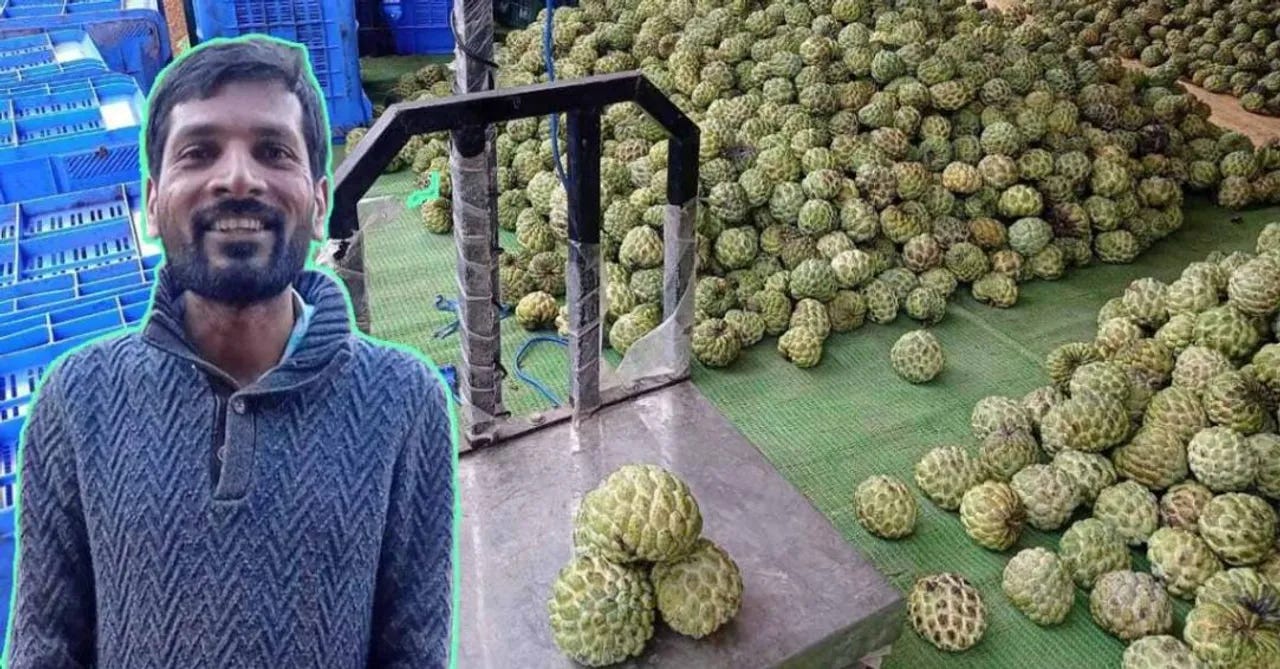
In the dense forests of Bastar, Chhattisgarh, tribal communities have depended on forest produce for generations. Tamarind, jamun, custard apple, medicinal plants and resins grow in abundance. Yet for decades, the women who harvested them earned barely enough to survive.
The problem was never the forest.
It was the market.
This is where Satendrasingh Lilhare, founder of Bastar Se Bazaar Tak, stepped in — not with donations, but with a scalable business model.
A Childhood Rooted in Struggle
Raised by his mother and aunt in a modest household near the Chhattisgarh border, Satendrasingh grew up witnessing the relentless labor of tribal women who worked long hours for minimal returns.
“Our household, education and well-being depended on a very modest income,” he has reflected.
Education became his pathway forward. Scholarships helped him complete his schooling and higher studies. Yet even while building his career outside Bastar, he carried a strong desire to return and address the systemic issues affecting his community.
After nearly a decade in the social and development sector — and completing a two-year business management course — he realised something crucial:
The challenge wasn’t effort or productivity.
It was exploitation within the supply chain.
Identifying the Core Problem: Middlemen
Bastar is one of Chhattisgarh’s largest producers of forest goods. But farmers and tribal women lacked access to real-time mandi prices and direct buyers.
Middlemen dominated procurement.
Margins disappeared before reaching producers.
Satendrasingh saw an opportunity to redesign the value chain — ensuring fair prices, transparency and direct access to national markets.
Choosing Enterprise Over Charity
When it came time to act, he had two paths — start a nonprofit or build a commercial venture.
He chose business.
“I don’t want to do charity. Women and tribal communities want real jobs and income, not sympathy.”
In 2020, he launched Bastar Se Bazaar Tak, selling products under the brand name Forest Naturals. The venture follows a forest-to-fork model, directly connecting producers with consumers while eliminating intermediaries.
How the Model Works
The business operates on three pillars:
Direct Procurement:
Women bring produce and receive market-linked prices without commission cuts.Village-Level Employment:
Women are hired for washing, sorting, grading and packaging — creating flexible and consistent local work.Infrastructure & Partnerships:
Collaborations with panchayats streamline sourcing, while cold storage reduces wastage and preserves pricing power.
Payments are transferred directly into women’s bank accounts, building financial independence and transparency.
Scaling With Impact
Since inception, the venture has:
Sold over 50 tonnes of produce
Generated ₹1 crore in revenue
Engaged 1,550 tribal women across Bastar
Built demand across cities including Mumbai, Hyderabad, Pune and Raipur
Products are available nationwide via online marketplaces such as Amazon and JioMart.
For women like Pancho Jyoti, income has grown from ₹1,000–₹1,500 per month to ₹5,000–₹6,000 every 20–25 days, depending on output. Income stability has translated into improved living standards and greater financial autonomy.
BeingFounders Take
Satendrasingh Lilhare’s journey highlights a powerful lesson in modern Indian entrepreneurship:
Impact scales when business fundamentals are strong.
He did not build a charity-driven intervention.
He built a value-chain correction model.
By eliminating intermediaries, ensuring fair pricing systems, and introducing storage infrastructure, he addressed structural inefficiencies — not just the symptoms of poverty.
What stands out:
✔ Deep local understanding
✔ Trust built village by village
✔ Commercial discipline with social intent
✔ Dignity-led employment creation
This is a blueprint for rural entrepreneurship in India.
True transformation does not always begin in metros or venture-backed ecosystems. Sometimes, it begins in a forest — with a founder who understands both pain points and profit margins.
From Bastar to Bazaar, this is not just a business story — it is a reminder that entrepreneurship, when rooted in fairness, can rewrite the destiny of entire communities.
📩 Subscribe to BeingFounders
For more founder journeys, grassroots innovation stories, and deep dives into India’s emerging entrepreneurs — subscribe to BeingFounders and stay inspired by stories that matter.
Because every powerful company begins with a courageous founder. 🚀
(Source inspiration: The Better India)